 The Fairway Wire
Editorial
Every Sprinkler Head on This Course Is Slowly Sinking, and November Is When I Dig Them Back Up
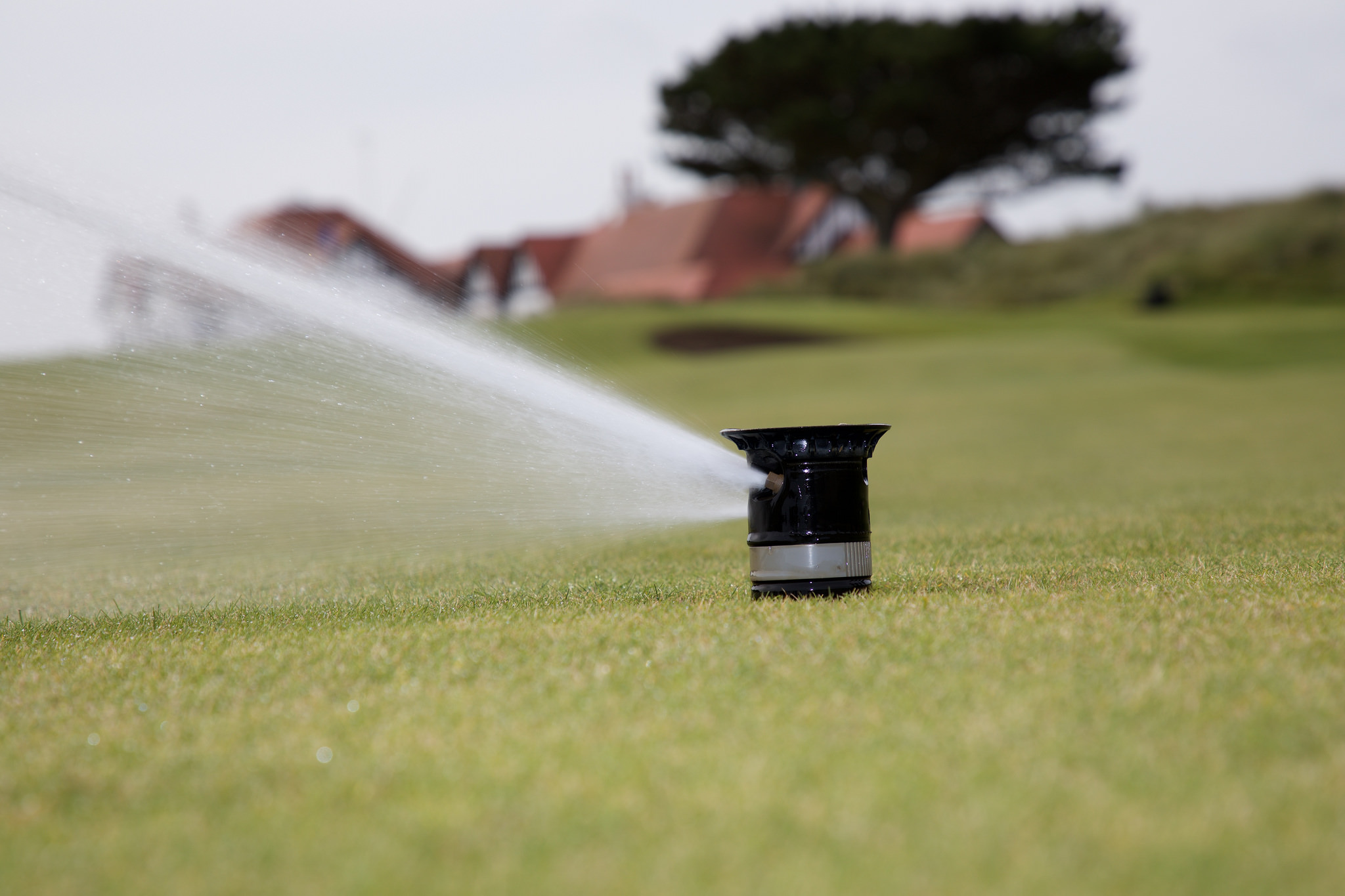
A sprinkler head does not stay where we buried it. Sandy soil, mower traffic, and a year of settling leave it sitting in its own little crater, throwing water short and wearing a scalped ring — so this month my crew goes head by head with a flat shovel and a short board, lifting each one back flush with the grass it feeds.
Nobody buries a sprinkler head crooked. The day it goes in, it sits dead flush with the ground, proud and level, water set to fly in a clean arc across the fairway. Then Florida gets hold of it. A year under our sandy soil, mowers rolling over it, carts cutting the corner beside it, rain washing the edges in a spoonful at a time, and that head has sunk a half inch into its own little crater. It did not break. It just settled, the way everything settles out here, and the grass settled differently than it did.
You can read a sunken head from fifty yards if you know the signs. There is a ring around it, always a ring. The mower drops into that dip and scalps the turf on the rim, so the head wears a thin brown halo all summer. Water pools in the low spot and stays after the rest of the fairway has dried, and the throw goes short and dumpy, because a head sitting low sprays into the grass in front of it instead of over it. So you get a green donut around the head and a thirsty brown patch ten feet beyond it, both telling the same story. The head is not worn out. It is just standing in a hole of its own making.
Left alone, it gets worse in ways that have nothing to do with water. A sunken head is a trip waiting on a dew-slick morning, and an ankle problem for a man walking backward pulling a hose, which around here is a regular form of transportation. A ball finds that crater, too. It will sit down in the dip where a good lie ought to be, or catch the hard edge on a bounce and kick sideways, and the golfer will blame his luck when the truth is he got beat by a half inch of settled sand. Golf is a game of small numbers, and a half inch is a fortune.
So November is head-lifting season on my crew's list. The grass has slowed some, the overseed has taken hold, and the calendar gives us a few quieter mornings for work that play never leaves room for in July. The tools tell you what kind of job it is: a flat shovel, a bucket of coarse sand, a short straight board, and a man's knees. You cut a neat circle of turf around the head and set it aside like a dinner plate, dig down careful around the pipe — careful, because the fitting below does not forgive a shovel — then lift the whole thing, pack fresh sand under it a little at a time, and lay that board across the top. The head sits right when the board rides flat on the grass and kisses the top of the head at the same time. Not proud, not shy. Flush. Then the turf goes back, you tamp it gentle with your boot, and you run that zone for two minutes to watch it pop up, throw clean, and settle back where it belongs.
It is slow work and it does not photograph well. A course my size carries heads by the hundreds — fairways, tees, green surrounds, a line along every pond bank — and a good man does maybe fifteen or twenty in a morning if the digging is honest. Nobody will ever walk up and say, my word, the sprinkler heads sit beautifully level this week. That is not a complaint a golfer has ever made, and it is sure not a compliment one has ever paid. The proof shows up sideways, a month later, in the rings that are not there anymore, the dry patches that filled in, and the morning nobody tripped.
There is a fairness to it I have always liked. The head's whole job is to stand at exactly the height of the world it serves — no higher, where the mower would take its top off, and no lower, where its own water cannot escape it. My job, a few mornings every fall, is to go around on my knees and restore that arrangement one bucket of sand at a time. It will never make a brochure. But the next time your ball rolls clean over a sprinkler head and keeps its line, or your approach lands soft on ground that got its full drink, some of that happened because a man you never saw dug a small hole in November and filled it back in at exactly the right height.