 The Fairway Wire
Editorial
Cart Path Only Is the Hardest Call I Make Before Coffee
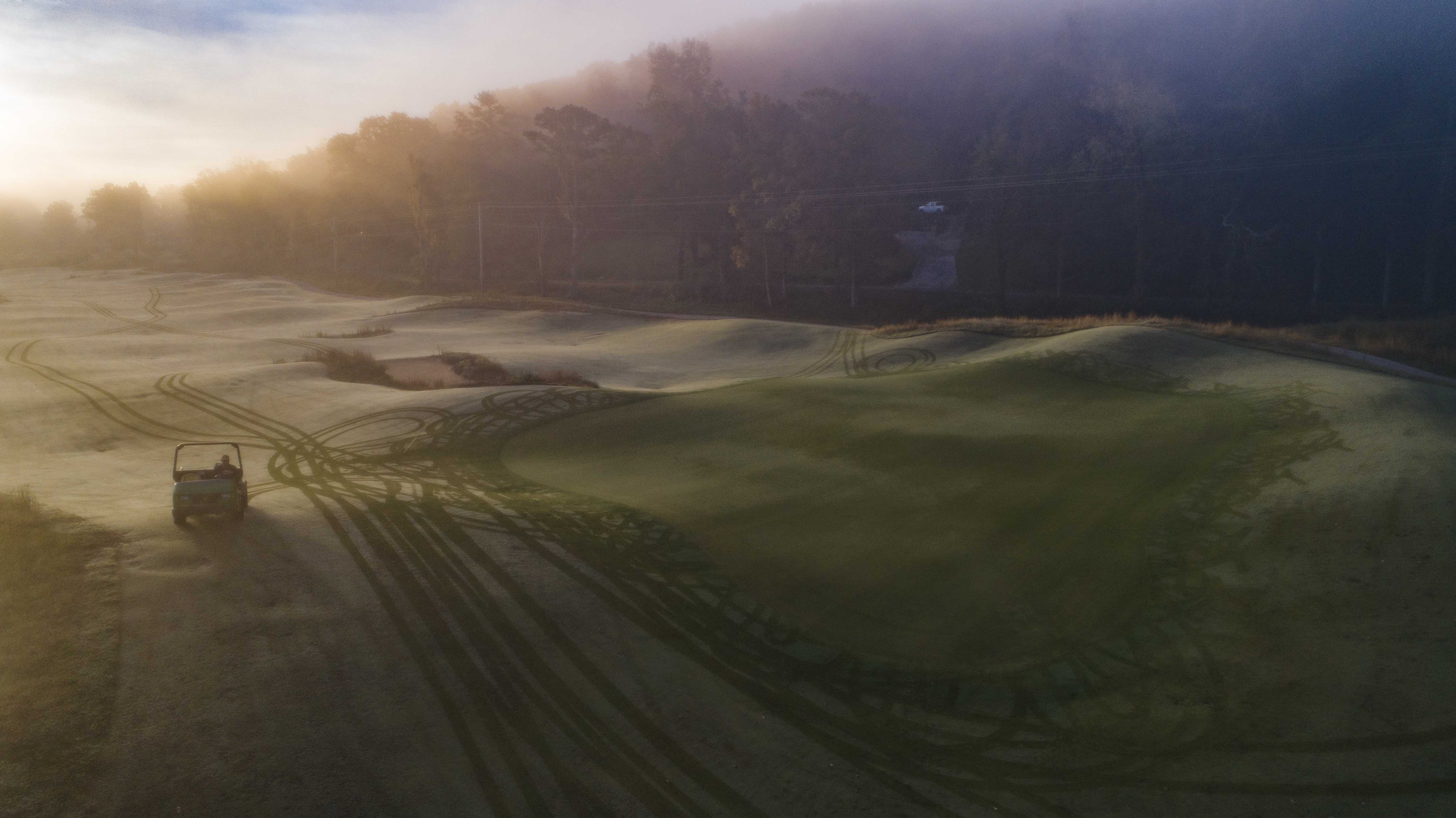
Nobody thanks the crew for those three words at the first tee, but the call is made in the dark — with a rain gauge, a wet boot, and the low spots nobody else walks. A greens keeper explains what wet tires really do to a fairway, and why being careful for one morning protects the rounds still to come.
Nobody has ever thanked me for saying those three words. Cart path only. I can watch a man's whole morning change when he hears them at the first tee — shoulders drop, a little sigh comes out, and suddenly I am not the fellow who cut the greens he is about to enjoy. I am the fellow who just made him walk. Friend, I understand it. I play this game too. But nobody on this property wanted to make that call less than I did, and I made it before my coffee had a chance to work.
The call starts the night before, really. In Florida the rain does not always announce itself politely. A cell parks over Ponte Vedra at ten o'clock, drops an inch and a half while the whole town is asleep, and by the time my alarm goes off the gauge by the shop is telling a story the sky has already forgotten. The stars can be out, the sunrise can be postcard pretty, and the course can still be holding all that water just under the surface, waiting for the first set of tires to find it.
So my first trip is not to a mower. It is to the low places. Every course has them — the fairway that drains last, the dip in front of a green that stays soft until noon, the shady corner where the soil never quite gets the memo. I walk them, not just drive them. A boot tells you more than a tire ever will. If my heel sinks and water rises into the print, that ground is not ground this morning. It is pudding with grass on top, and a six-hundred-pound cart rolling across it is not transportation anymore. It is a plow.
Here is what wet tire traffic actually does, and it does not wash off by lunch. On saturated soil a cart compacts. It squeezes the air out of ground the roots are trying to breathe through, smears the surface into a slick that tears the next time anything turns on it, and in the soft spots it cuts ruts that hold water, kill grass, and stay visible for weeks. One cart is a rumor. Forty carts following the same line to the same ball is a trench with a tee time. We cannot un-compact a fairway before tomorrow's round, and the man complaining today would complain louder next week when his ball sits in the brown line last Saturday left behind.
That is the arithmetic nobody sees from the tee box. Cart path only is not about today being perfect. It is about tomorrow still having fairways worth driving to. Sometimes we split the difference — ninety degrees, in and out on the shortest line, no cruising the rough like a scenic highway. Sometimes the front is ready and the back is not, and the call sounds made up until you walk both sides. And some mornings the sun climbs, the breeze picks up off the ocean, and by ten the place would have carried traffic just fine. I would rather answer for being careful on a morning that dried out than for damage on one that didn't. Careful is a day. Damage is a season.
I also know what I am asking. Some of our players walk those extra yards on knees that have already filed a formal protest. Some are out here precisely because the cart makes golf possible for them. That is why the handicap flag exists and why we honor it — closer access for the fellows who truly need it, with a little common sense about the softest ground. Cart path only was never meant to be a wall. It spreads the weight of a whole day's golf onto concrete that can take it, so the grass only has to carry the game, not the vehicles too.
So if you hear those three words from me at sunup, know what went into them: a rain gauge, a wet boot, a walk through the low spots in the dark, and a crew chief's promise that we are protecting the course you came to play — including the round you have not booked yet. Take the extra walk slow. Hit it a little straighter, if you can arrange it — cart path only has improved more swings than any lesson I ever took, because nobody aims for the far side from a concrete path. I will be checking those low spots again by midday, hoping I can lift the call early. Nobody wants those tires back on the grass more than the man who mows it.