 The Fairway Wire
Editorial
Before the First Tee Time, the Course Already Belongs to Somebody Else
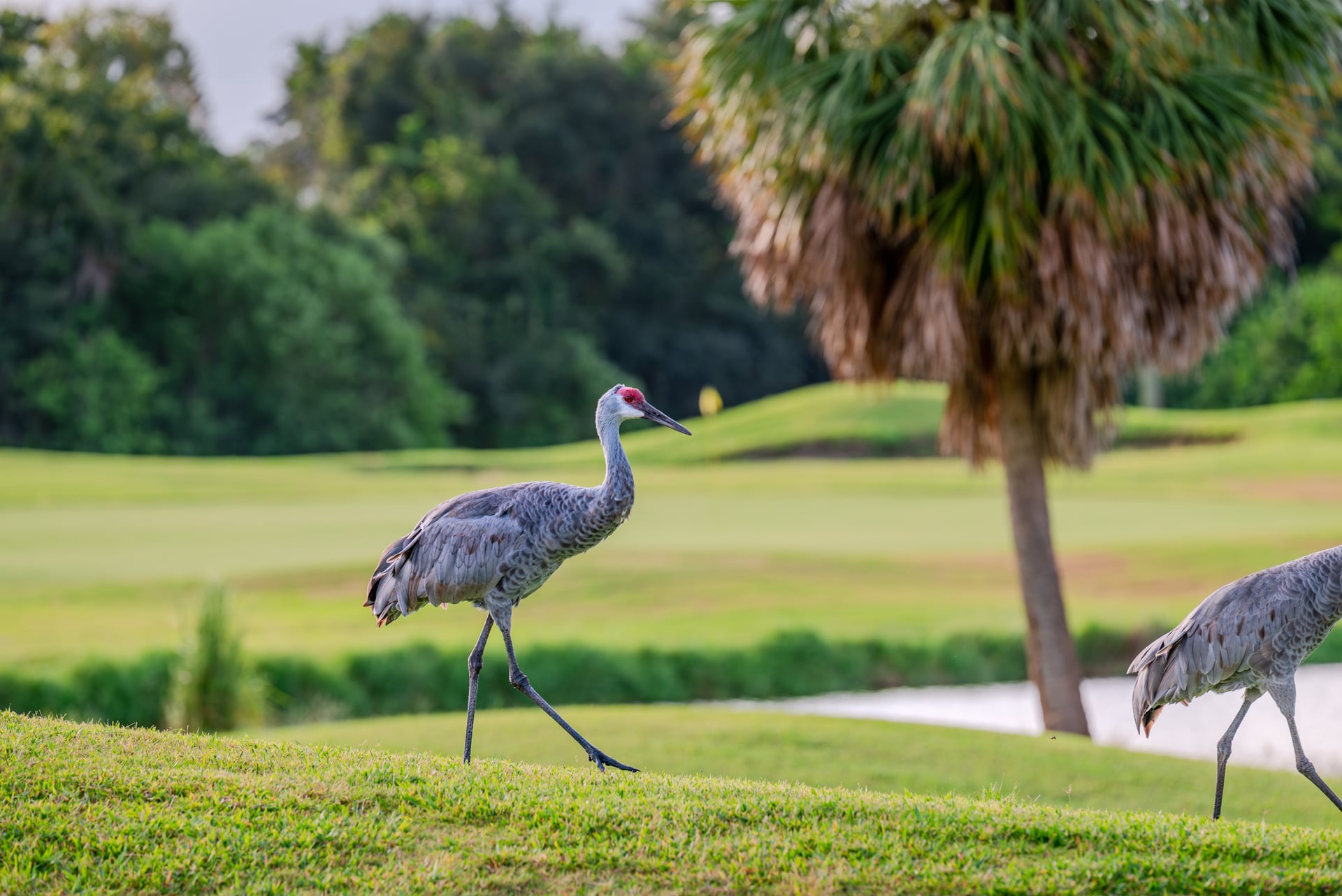
Long before the first tee time, a Florida golf course is already busy — herons fishing the ponds, cranes crossing the fairway, and a gator who settles every lost-ball argument. A greens keeper on the dawn ride explains why the crew's quietest job is keeping the place alive for the residents who never leave.
The first ride of the morning is my favorite part of this job, and it is not close. It is still dark enough that my cart lights cut a little tunnel through the mist, the ponds are flat as glass, and for about twenty minutes the golf course does not belong to golfers at all. It belongs to the regulars who never pay a greens fee and would not leave a review if they could.
Start at the pond on the way to the first green. A great blue heron is standing in the shallows like he owns the place, which, at that hour, he does. He has been fishing that bank longer than most of our members have had their handicaps. A few yards down, two white egrets are working the edge with that slow, patient step, and an anhinga is already up on a post with its wings spread, drying out before the sun has even cleared the trees. None of them move for my cart. They have seen it a thousand times. I am just the morning traffic.
Then there is the resident everybody asks about. Yes, we have gators. This is Florida. A pond without a gator in it is just a pond that has not introduced itself yet. Ours mostly keep to themselves — a set of eyes and a snout in the morning light, a slow slide off the bank if you get closer than they like. The crew rule is simple and it has never needed revising: give them room, give them respect, and never, ever argue about a ball that rolled near one. That ball is theirs now. Take your drop, take your story, and be grateful for both. I have watched grown men who will fight over a two-foot gimme turn into perfect gentlemen in front of a six-foot gator, and honestly, golf could use more of that kind of clarity.
The dawn roll call goes on from there. Sandhill cranes strut across a fairway like a retired couple out for their morning walk, tall, unhurried, and faintly annoyed that you exist. An osprey circles the big lake with a fish still arguing in its talons. Some mornings a river otter family cuts across a cart path in single file, late for somewhere important. Turtles sun on the bulkhead. A softshell the size of a range basket lid lives by one of our bridges and has, as far as I can tell, never once been in a hurry about anything.
Here is what I wish more golfers knew: a lot of what looks like our landscaping is actually hospitality for them. Those tall, rough edges around the ponds that somebody in the grill room calls unkept? That is a buffer. It filters runoff before it reaches the water, it gives the birds cover, and it keeps our fertilizer and our work where they belong — on the turf, not in the lake. The no-mow areas are not laziness with a better press agent. They are the parts of the property we deliberately leave alone so the place stays alive around the golf. A golf course in Florida is hundreds of acres of grass, water, and woods stitched together. Managed right, it is one of the biggest pieces of green space left in a fast-growing county. Managed careless, it is just a pretty lawn with a parking lot.
That stewardship is quiet work. We watch what goes near the water and how much. We keep our setbacks. We learn which bank the heron fishes, which tree the osprey prefers, which pond the big gator claims in the spring, and we route around all of it without ever putting it on the pin sheet. Nobody applauds it. The wildlife certainly does not. They just keep showing up at dawn, which around here counts as a five-star review.
So when your tee time comes and the course looks empty and perfect and entirely yours, enjoy it — it is, for the next four hours. Just know you are the second shift. The first shift was a heron, a gator, two cranes, and a turtle who has never hurried for anyone, and they will all be back out there at dusk when we hand it over again. We do not really own this place, my crew and me. We just keep it nice for everybody who lives here — including the ones with feathers, shells, and absolutely no interest in your scorecard.