 The Fairway Wire
Editorial
Before My Mower Cuts a Green, a Little Brush Stands the Grass Up
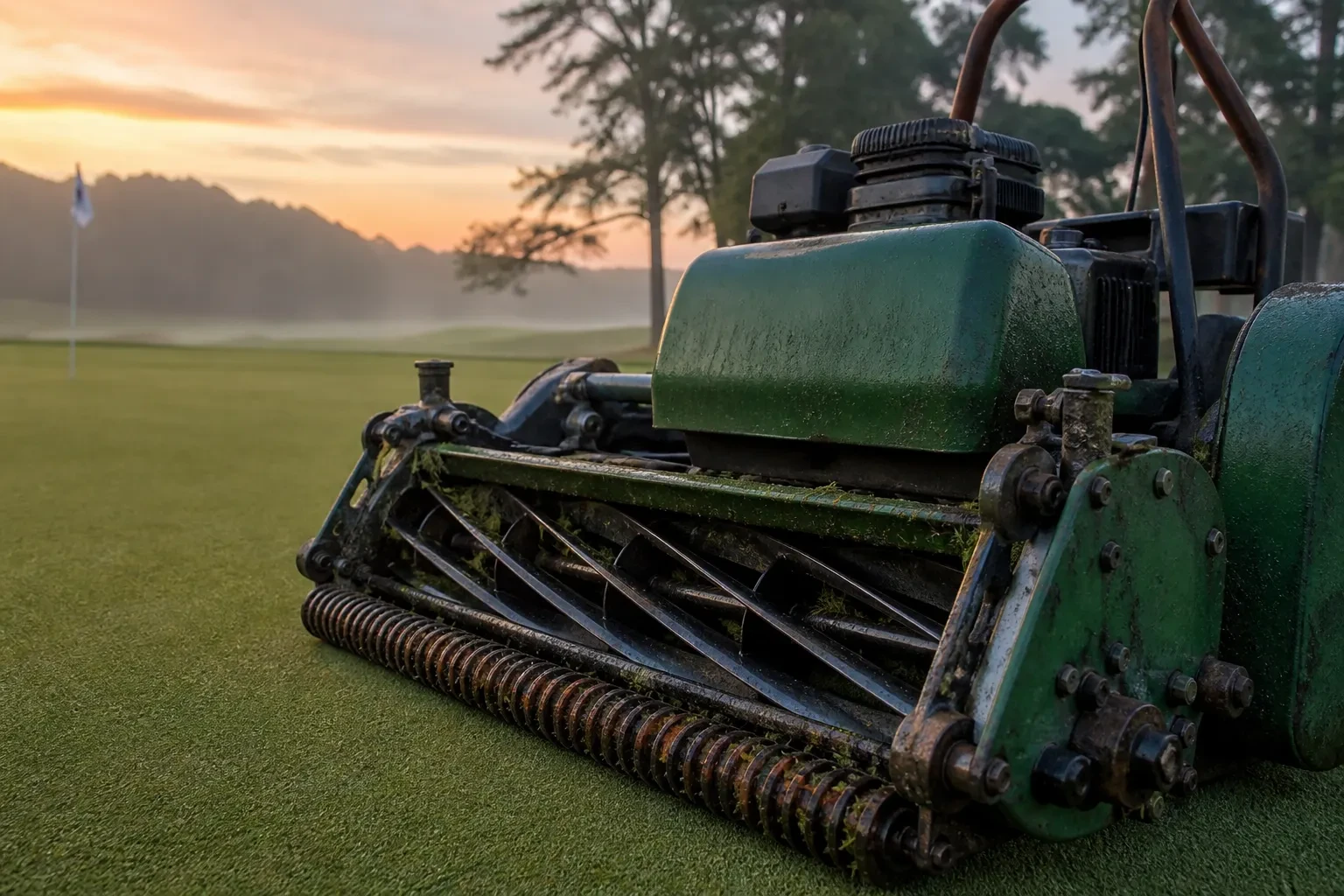
Grass on a green does not grow straight up. It leans, and a leaning green putts one way going and another way coming back. Cliff writes about the small brush riding in front of his mower reel, the grain it lifts out of the cut, and why young November rye needs it most.
Grass on a green does not grow straight up. I wish it did. It would make my mornings simpler and a fair number of putts more honest. Grass leans. It leans toward the light, it leans downhill, it leans the way the water runs off, and on an overseeded green in Ponte Vedra in November, our young rye leans whichever way yesterday's mower pushed it. A green full of leaning grass is a green with a grain, and grain is a quiet hand on your ball that nobody put on the scorecard.
That is why there is a little brush riding in front of my mower reel, low to the ground, spinning against the direction we are traveling. Most golfers have walked past it a thousand times and never seen it. It is not much to look at — a row of stiff bristles on a roller, caked with dew and clippings by the second green. But that brush does the first half of the mowing before the blades ever arrive. It stands the grass up.
Here is the problem it solves. A reel mower cuts like scissors, and scissors only work on what stands up to meet them. A blade of grass lying flat gets pushed flatter by the front roller and sails right under the cut, uncut, smug about it. Then it springs back up an hour later, taller than everything around it, and by ten o'clock the green has a five o'clock shadow in patches. Putts start hopping over those stragglers. A green can measure at the right height in my hand and still putt shaggy, and nine times out of ten the brush, or the lack of one, is the story.
Run the brush first and the picture changes. The bristles flick through the canopy and lift every leaning blade to attention a half second before the reel takes the ends off level. The cut comes out even because the grass met it even. Do that pass after pass, day after day, and you are also training the lean itself down. Grain never fully quits — bermuda underneath our rye has opinions that go back years — but a brushed green putts truer in both directions, and the member who swears the morning groups get a different green than he does is, for once, not just making excuses. He might have been right in the old days. The brush is how we fixed it without telling anybody.
November is when that brush earns its keep most. Rye comes in soft and eager and flops over if you look at it hard. It grows sideways as happily as it grows up, and a week of mowing without the brush would mat it into a green carpet that looks lush from the cart and putts like a welcome mat. The brush keeps it upright and honest while it is young. It also does small janitor work on the way through: it knocks the dew ahead of the reel so the cut stays clean, and flicks off the odd worm casting.
Like everything on my mower, it has a setting, and the setting has an opinion. Set the brush too easy and it is a decoration — bristles kissing the tips and changing nothing. Set it too hard and it stops grooming and starts bullying: it can worry young rye right out of the ground, thin the weak spots I am already nursing through the shade, and leave brush marks that show in the stripes like a signature I did not mean to sign. So it gets checked the way the height gets checked, down on one knee in the shop light, bristles against the concrete, adjusted a notch at a time. And bristles wear. A brush that has done a season of dawn patrols is shorter and softer than the one we bolted on, quietly doing less every week while looking exactly the same. We change them before they become a rumor of a brush.
None of this will ever make a highlight or a conversation at the turn. Nobody has ever holed a putt, picked the ball out of the cup, and thanked the grooming brush. That is fine. Most of my job lives in that same country — small iron doing small work at five in the morning so the surface feels simple by eight. But the next time your putt holds its line through the last three feet, spare a thought for the spinning row of bristles out front. The grass stood up. The mower just took attendance.