 The Fairway Wire
Editorial
Before I Dig Anywhere on This Course, I Have to Read the Paint on the Ground
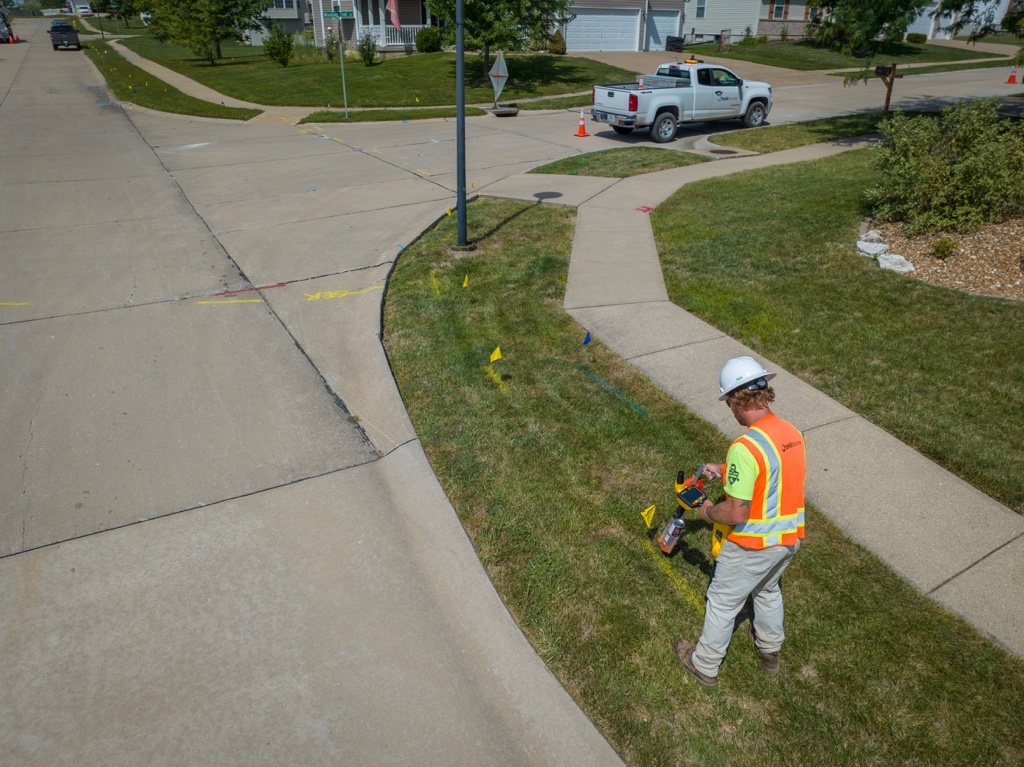
November is digging season in Ponte Vedra — dry ground, repair lists, and holes that need fixing. But the first tool out of the truck is not a shovel. It is a phone call, a handful of little flags, and a set of colored lines that tell me what is sleeping under the fairway.
November is digging season in Ponte Vedra. The rain has quit for a while, the ground is dry enough to hold a clean edge, and my repair list has been growing since summer — a drain that needs replacing, an irrigation line with a slow leak, a valve that has to move six feet. Every one of those jobs starts with a hole. And not one of them starts with a shovel.
The first tool out of the truck is my phone. Before we break ground anywhere on this course, we call 811 — Sunshine State One Call, here in Florida — and we wait. A day or two later, folks come out with locating gear and paint the ground for us, and leave little flags standing in the grass like a parade nobody ordered. Golfers walk right past them. Some ask if we are marking a new tee. We are not. We are reading a map that only exists for about a week, and that map is the difference between a repair and a disaster.
The colors are a language, and it is the same language everywhere in this country. Red paint means electric. Yellow means gas. Orange means communications — phone, fiber, cable. Blue means water. Green means sewer and drain lines. Pink is temporary survey marking, and white is the color we paint ourselves to show where we plan to dig. Standing over a fairway covered in dotted lines, I am not looking at graffiti. I am looking at everything sleeping under that grass, drawn right on top of it.
Here is what most golfers never think about: the public locators only mark the public lines, up to the meters. A golf course is a small underground city we built ourselves, and most of it is private. Under every fairway runs a web nobody from the county has on a map — main irrigation lines as big around as a dinner plate, smaller lines feeding every sprinkler head, drain lines, and miles of thin control wire carrying a signal out to every electric valve. Nick one wire with a shovel and a whole section goes dark. Not loud dark. Quiet, thirsty dark, the kind you find two days later when a green starts to stress and nobody knows why.
So for our own lines, we are the locators. We have a wire tracker in the shop — a box that puts a signal on a wire and a wand that beeps louder the closer you get — and I have walked entire holes bent over that wand like a man looking for a lost contact lens. We also have the old maps, drawn by hand by men who retired before I started, accurate right up until they are not. Every old hand carries part of the real map in his head: where the line jogs left to miss a tree that is not there anymore. That memory is why you do not let the new man dig alone in his first month.
Once the paint is down, the rule is simple: near a mark, you dig by hand, and you dig gentle. The marks come with a tolerance zone, roughly two feet on either side, so inside that zone the backhoe stays parked and a man works slow, shaving dirt instead of stabbing it. It takes an afternoon. Hitting a pressurized mainline takes four seconds, and then you get a geyser in the fairway, a lake where your hole was, and a repair bill that eats the rest of your month. I have seen that geyser once, on somebody else's watch. Once was a full education.
The cruel joke is that the paint does not last. We mow it off, the sun fades it, a good rain washes it thin, and the little flags get pulled by curious kids, curious golfers, and one very determined armadillo I have chosen not to name. So a locate comes with a clock on it: dig while the story is still written there, or call and start the whole dance over again.
I think about those lines every time somebody tells me a golf course is just grass and scenery. Grass is the roof. Under it is plumbing, wiring, drainage, and fifty years of other men's work, still doing its job in the dark. Most days my job is keeping the roof pretty. On digging days, my job is reading what is written on the ground before I dare to cut into it — because everything under a fairway forgives a lot of things, and a shovel is not one of them.