 The Fairway Wire
Editorial
At Noon I'm Not Watering the Green. I'm Keeping It Alive.
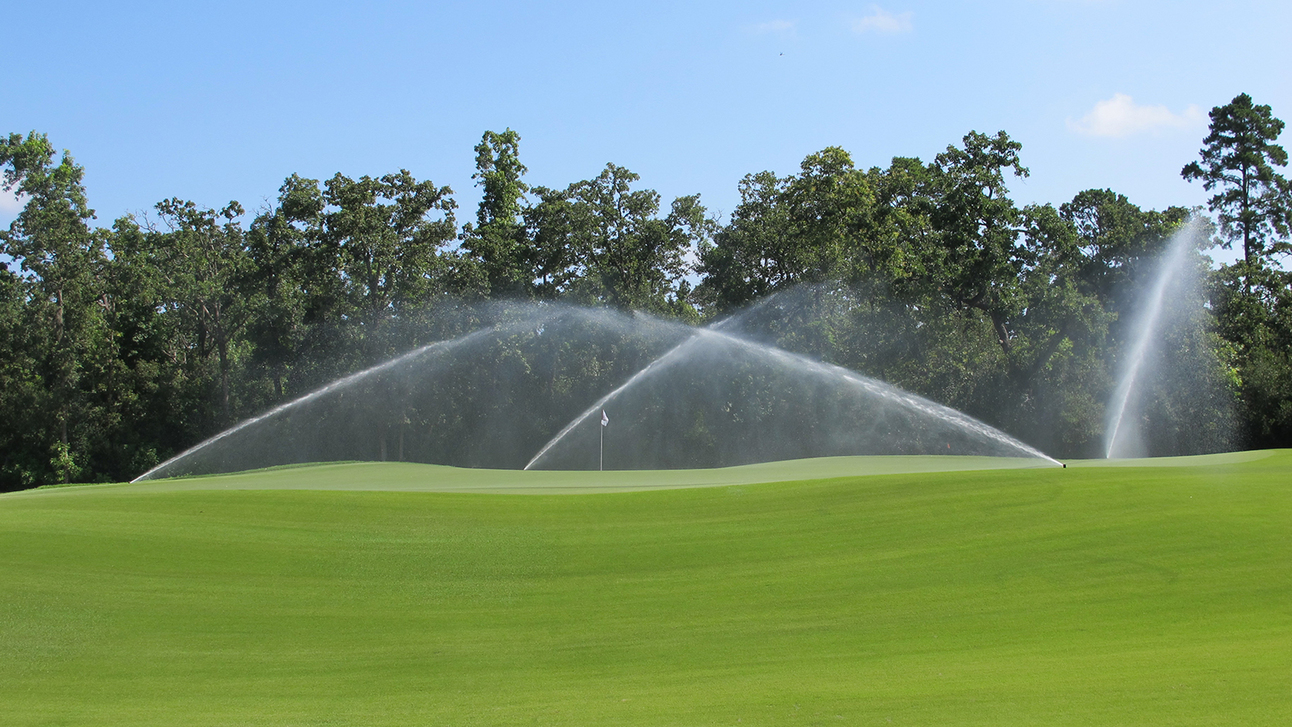
It looks like madness — a man watering a green at high noon in a Florida summer. Cliff explains syringing: the light mist that cools a wilting green by a few life-saving degrees, and why it takes a person with a hose instead of a timer on a wall.
It happens nearly every hot day, right around the turn. A golfer watches me walk onto a green with a hose in the middle of a round, in the middle of the day, in the middle of a Florida summer, and I can read his face from thirty yards: this man is watering the golf course at noon. In this heat. Does he not know about evaporation? Sir, I know about evaporation. I could teach evaporation. What I am doing is not watering. It is closer to giving the grass CPR.
The word for it is syringing, and it might be the most misunderstood job on a golf course. Syringing is a light mist of water — a few minutes, no puddles, nothing that changes how the green plays for more than a little while — laid over turf that has started to wilt. And in July and August in northeast Florida, greens wilt. The air is ninety-five, the humidity is a wet blanket, and the grass is cut so short it has almost no leaf left to shade its own crown. That crown is the whole plant's life. Once it cooks, you do not have a stressed green. You have a dead spot shaped exactly like the place everybody needs to putt.
Here is the part that surprises people: the goal is not really to get water into the soil. We handled the soil at night, with the irrigation system, when the water can soak instead of vanish. The goal at noon is temperature. A fine mist across the leaf cools the canopy the way sweat cools your skin. Done right, you can knock the surface temperature down several degrees in minutes, and several degrees at one in the afternoon is the difference between a green that makes it to dinner and a green we are patching in October.
The trick is knowing which green, and knowing it before it tells the whole course. Every green has its own personality by midday. The one on the hill catches wind and dries first. The one tucked down in the trees sits in still, heavy air and wilts without ever looking dry — that is the dangerous one, because it fools you. So the midday job is a loop: ride, look, touch, check. We feel the surface with the back of a hand. We watch for signs a player would never notice — the grass going a dull blue-gray, footprints that stay pressed in the turf instead of springing back. A footprint that lingers is the grass asking for help in the only language it has.
And yes, we play through your round to do it. I know it is a strange sight, a man with a hose standing off a green while you line up a putt, and I promise you we think about your putt more than you think we do. We wait for the shot. We keep the water off the line. We are in and out in minutes. What I would ask in return is a little patience, because the alternative is playing that same green in two weeks with a brown, bumpy scar across it. Every golfer I have ever explained this to chose the hose — from the cart it looks like madness, but from the crew's side of the hose, it is triage.
There is a judgment call inside it, too, and it is where the job earns its keep. Syringe too little and the wilt wins. Syringe too much, too often, and you keep the surface wet and warm for hours — which in Florida is an open invitation to the diseases that already circle our greens all summer like they are waiting for a table. The line between cooling a green and cooking up a fungus is measured in minutes of water. That is why it is a person with a hose and not a timer on a wall. A timer cannot see the blue-gray. A timer cannot feel the crown.
So the next time you see one of us out there at high noon, hose in hand, looking for all the world like we picked the worst possible hour to water a golf course — know that we picked it on purpose. The worst hour is the whole point. Nobody needs saving at six in the morning. They need it at one, when the sun is standing right on top of us and the margin between a great green and a gone one is about the width of a mist. We are not watering. We are buying the grass one more afternoon, so it can be there for your round tomorrow.