 The Fairway Wire
Editorial
A Ball Mark Fixed in Ten Seconds Heals. One Left Alone Lingers for Weeks.
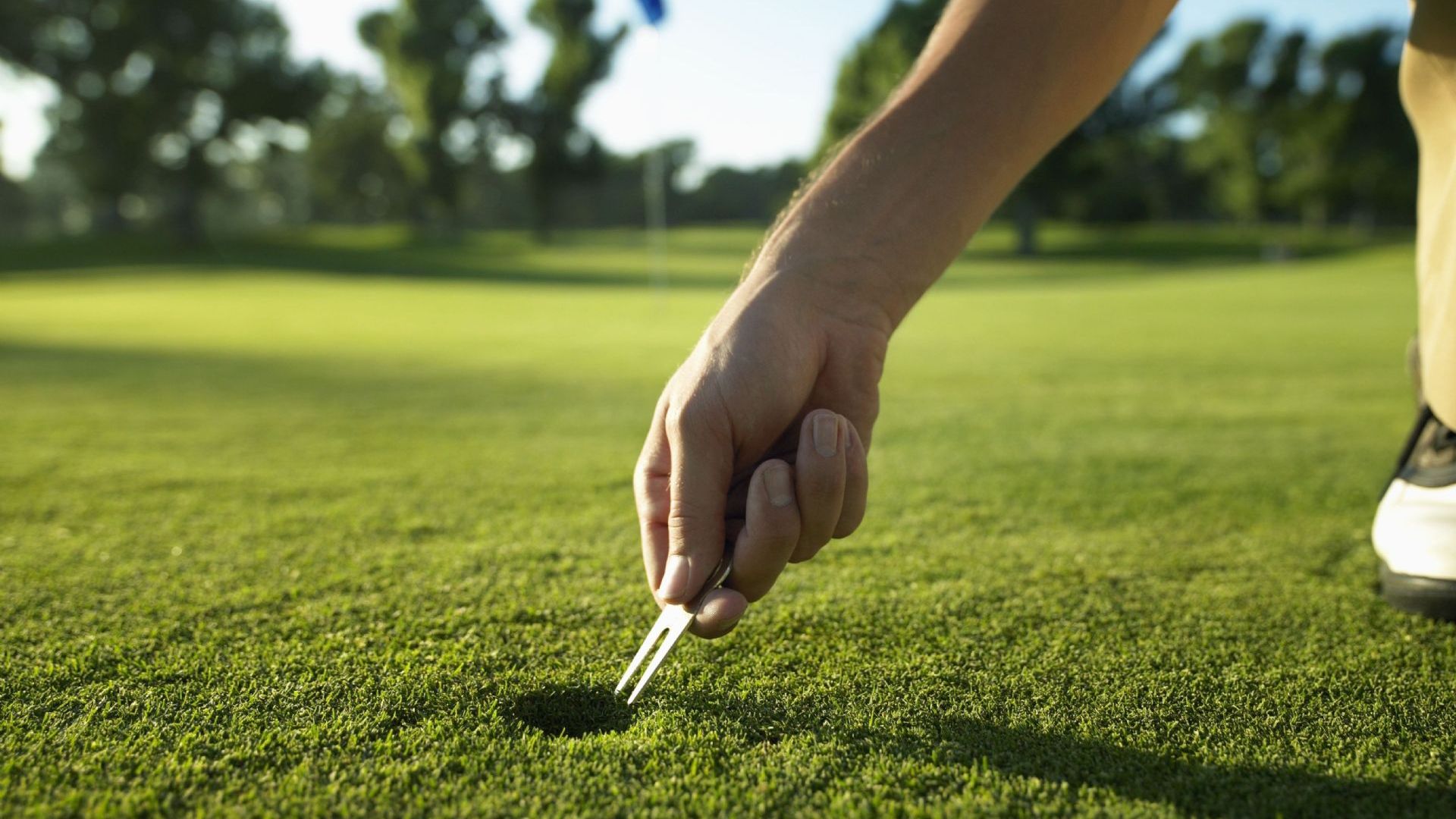
Every morning I walk our greens in Ponte Vedra and read them like a report card, and the ball marks tell me exactly who played the day before. A mark repaired right heals in days; one left alone, or torn up from the middle, can scar a green for weeks — and in overseed season our young rye has no defense at all.
Every morning, before the first tee time, I walk the green I'm cutting the cup on and read it like a report card. Not the grass, at first. The ball marks. They tell me who played the day before, and whether anybody in the group owned a repair tool or just admired the scenery.
A golf ball coming down from the sky does not land polite. It hits at speed, on a surface cut down near an eighth of an inch, and it shoves the turf sideways and tears roots clean under the skin of the green. That little crater is not a dent. It's an injury. And like most injuries, what happens in the first few minutes decides whether it heals in days or hangs around for weeks.
Here is the part that still amazes me. A ball mark fixed right — right then, while the grass is still pushed instead of torn loose — can heal in three or four days. The same mark left alone can sit there brown and scalped for three weeks. Ten seconds of work buys back twenty days of green. There is no better trade on this golf course, and I include the hot dogs at the turn.
Fixed right is doing a lot of work in that sentence. The wrong fix is the one that feels natural: stick the tool in the middle of the crater and pry up, like you're lifting the sunken part back to level. It looks helpful. It is murder. Prying up rips the roots still hanging on, leaves a pocket of loose dirt and air under the surface, and that spot dies from the bottom up. A week later it is a brown coin somebody else's putt has to hop over.
The right fix takes no strength. Work from the edges in. Push the turf around the outside of the mark gently toward the center, all the way around, then tamp it flat with the sole of your putter. You're not lifting anything. You're closing a wound. The roots stay connected, and the grass mostly forgives you by the weekend.
Why does the crew care about a spot the size of a quarter? Because it is rarely one spot. A busy Saturday puts a couple hundred golfers across eighteen greens, and every approach that finds a putting surface leaves a mark. That is hundreds of little injuries a day, and no crew can walk behind all of you fixing them one by one. We try, while we set pins, but the cup still has to get cut before the first group tees off.
November makes it worse. Right now our greens are wearing a young coat of rye over Bermuda that is slowing down for the cool nights. That rye is tender, with shallow roots that tear easy, and the Bermuda underneath is in no hurry to grow anything back until spring. A mark torn up in July might bully its way back in a week of heat. A mark torn up this month just sits there. An open crater is also an invitation: disease pressure in Florida never fully clocks out, and damaged turf is where trouble gets its foot in the door.
I'll confess my favorite unfair fact in this business: the better your shot, the bigger your responsibility. The man who skulls a wedge across the green leaves no mark at all. The woman who flights a seven iron in high and soft and stops it by the pin — that ball checks in like a meteor. Skill made the crater. So if you hit the shot of your day, congratulations, truly. Now spend the ten seconds. It is the only encore that shot needs.
There's an old saying among golfers: fix yours, plus one more. Out here we hear it as arithmetic. If every player repaired their own mark and adopted one orphan — one of those old brown coins somebody else left behind — the greens would carry half the scars they do. Half. For ten extra seconds a round. I've watched retirees do it without thinking, every green, all morning, and I've watched young bombers walk past craters like they were somebody else's weather. Guess whose greens I brag about.
So this is my whole sermon, and it's a short one. That green was mowed before daylight by people who care about it more than is probably healthy. Push the edges in, tamp it flat, and roll your putt over grass that will be healed by the weekend. Ten seconds. The grass remembers kindness longer than you'd think, and out here in Ponte Vedra, so does the crew.